A real gesture
People move the way they can, not the way a mouse demands. C.A.T. learns how they move and tolerates tremor, fatigue and the variation from one day to the next.
These settings change how this site looks in your browser and are remembered next time you come back. Nothing is sent anywhere: they are stored on your device.
There is no "screen reader" button here: this site is built to work with the screen reader you already use, and a pretend one on top would only get in its way.
Digital accessibility
C.A.T. learns how each person moves. C.A.T.Y. understands what's on screen. Together they turn a real gesture into digital action — with no constant precision required and no commands to memorise.
Designed to meet WCAG 2.2, ISO/IEC 27701 and ISO 27001.
The full pitch 3:06
Nerea Panadero spends three minutes presenting AIntegra on stage at the Startup Valencia cybersecurity event, held at València Innovation Capital, with the audience seated in front of her and the project slides on the big screen. She opens by asking the audience about everyday admin — who files their own tax return — to get at the underlying problem: the interface. She then introduces the physical device, C.A.T., the Cognitive Assistive Trackpad, which lets you operate a computer in a way that fits each person’s range of movement («and we call it the cat», she says), followed by C.A.T.Y. and its three pillars. The closing stretch covers privacy by design, the cybersecurity work, the roadmap and the team — two specialist telematics engineers — and ends on the company motto: make it possible, make it accessible.
The shift
1.3billion people
face a barrier to using a computer today.
Roughly one in six people worldwide.
They are not broken. What's badly calibrated is the interface: it assumes a level of precision, memory and consistency that almost nobody has every day.
Meanwhile there are people who can't book a doctor's appointment without someone steadying their hand on the mouse, or check their bank balance without dictating the password to another person. That isn't inconvenience. It's autonomy.
The person adapts to the machine The machine adapts to the person
How it works
There's no new language to learn. The gesture a person can already make becomes the control.
People move the way they can, not the way a mouse demands. C.A.T. learns how they move and tolerates tremor, fatigue and the variation from one day to the next.
C.A.T.Y. reads what is on the screen, in the document or on the active page. Processing happens on the device itself wherever that is feasible.
Navigate, read aloud, summarise or run a command. The same gesture means different things depending on what's in front of you.
Product
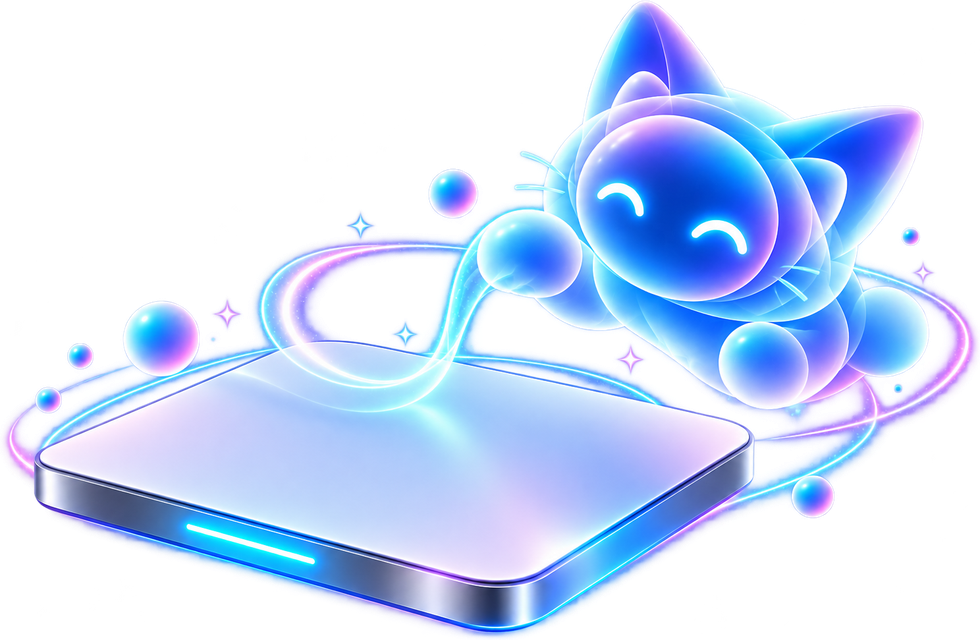
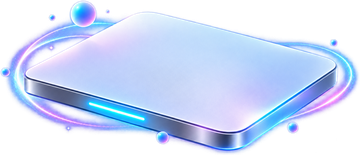
The hardware. An adaptive trackpad that replaces or complements the mouse through personalised gestures. It doesn't demand constant precision: it calibrates to each person's range of movement and copes when that range changes.

The AI layer. It reads the gesture in the context of what's on screen and turns it into action: navigate, read aloud, summarise or run commands. It also works in voice mode.
Who it's for
Accessibility isn't a category of user. It's a condition that comes and goes: an arm in a cast, a migraine, a twelve-hour day, age.
People with visual, motor or cognitive disabilities. Older people. Anyone with limited digital confidence. And also students, professionals and anyone dealing with fatigue or repetitive strain from mouse use.
Accessibility and disability organisations that want to test a real alternative to the mouse with the people they support, with hands-on guidance and measured results.
Universities, schools, public administrations and companies that need their workstations and digital services to be usable by their whole workforce and everyone they serve.
Before and after
Reading a long document on a website and coming away with what matters.

Cybersecurity
Someone who needs help using a computer often ends up handing their password to another person. That's a security problem, and it's a design problem.
Whatever can be handled on the device is handled on the device. Less data leaving means less surface to protect.
Hidden screen and private audio, so the device can be used in a public space without exposing sensitive information to whoever is standing behind you.
An accessible alternative to visual CAPTCHAs, which today shut out millions of people with visual impairments.
Pilots
A pilot isn't a long demo. It's a trial with real people, with criteria agreed before it starts and data at the end.
Track record
First prize at the Ford Smart Mobility Challenge (Ford Philanthropy, May 2026), among 21 teams.
Overall in the Startup Valencia and INCIBE cybersecurity programme, where we also took the best pitch award.
 The Universitat de València high-technology incubator for artificial intelligence.
Visit their site
— IAtecUV (opens in a new tab)
The Universitat de València high-technology incubator for artificial intelligence.
Visit their site
— IAtecUV (opens in a new tab)
 The university behind the ecosystem we grew up in.
Visit their site
— Universitat de València (opens in a new tab)
The university behind the ecosystem we grew up in.
Visit their site
— Universitat de València (opens in a new tab)
 The Universitat de València entrepreneurship programme, where AIntegra started.
Visit their site
— UVemprén (opens in a new tab)
The Universitat de València entrepreneurship programme, where AIntegra started.
Visit their site
— UVemprén (opens in a new tab)
 The Universitat de València science and technology park.
Visit their site
— Parc Científic UV (opens in a new tab)
The Universitat de València science and technology park.
Visit their site
— Parc Científic UV (opens in a new tab)
 Spain's National Cybersecurity Institute, with whom we work on accessible security.
Visit their site
— INCIBE (opens in a new tab)
Spain's National Cybersecurity Institute, with whom we work on accessible security.
Visit their site
— INCIBE (opens in a new tab)
 The Valencian startup ecosystem association, and organiser of the cybersecurity programme.
Visit their site
— Startup Valencia (opens in a new tab)
The Valencian startup ecosystem association, and organiser of the cybersecurity programme.
Visit their site
— Startup Valencia (opens in a new tab)
Who we are
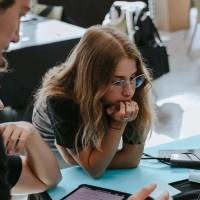
CEO and co-founder
I'm not satisfied with technology being accessible «as well». I want it to be impossible to build any other way. By design, not by choice.
LinkedIn — Nerea Panadero Alfonso (opens in a new tab) Portfolio — Nerea Panadero Alfonso (opens in a new tab)
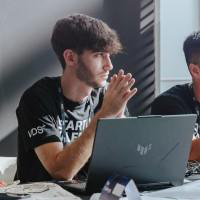
CTO and co-founder
We want to build technology that all of us can be included in. This prize doesn't just widen what we can do — it strengthens our commitment.
LinkedIn — Sergio Sabater Ruiz (opens in a new tab) Portfolio — Sergio Sabater Ruiz (opens in a new tab)
Questions
Both, depending on the case. Some people stop using a mouse entirely; others alternate — the mouse for what already works for them, C.A.T. for what doesn't. We don't force the choice.
No. Calibration starts from the movement each person already makes comfortably, and actions are assigned from there. If a gesture doesn't come out right, it gets changed; the system adapts to the gesture, not the other way round.
That's exactly the case it's built for. C.A.T. tolerates variation and fatigue: it doesn't match the gesture against a rigid template, but against the range of movement it learned from that person.
Processing happens on the device itself wherever that is feasible. When something has to leave, we say so explicitly and explain what for. The detail is on the cybersecurity page.
Yes. A good share of the people who try it come to us because of fatigue, repetitive strain, or simply because they'd rather not depend on a mouse. Accessibility rarely benefits only the people who need it.
Not yet. The product is designed to meet WCAG 2.2, ISO/IEC 27701 and ISO 27001, and we're working towards certification, but we don't hold the formal certificates and we're not going to claim otherwise.
The C.A.T. device costs €60 per unit and the C.A.T.Y. subscription is €15 a month. For organisations we don't quote a fixed price: it depends on the number of workstations, the support and the training, and we work it out case by case.
Voice mode and the interface are available in Spanish and English. If you need another language for a pilot, tell us in your demo request.

If there's a specific task that can't be done today without help, that's the conversation we want to have. We build the demo around that case, not around our script.